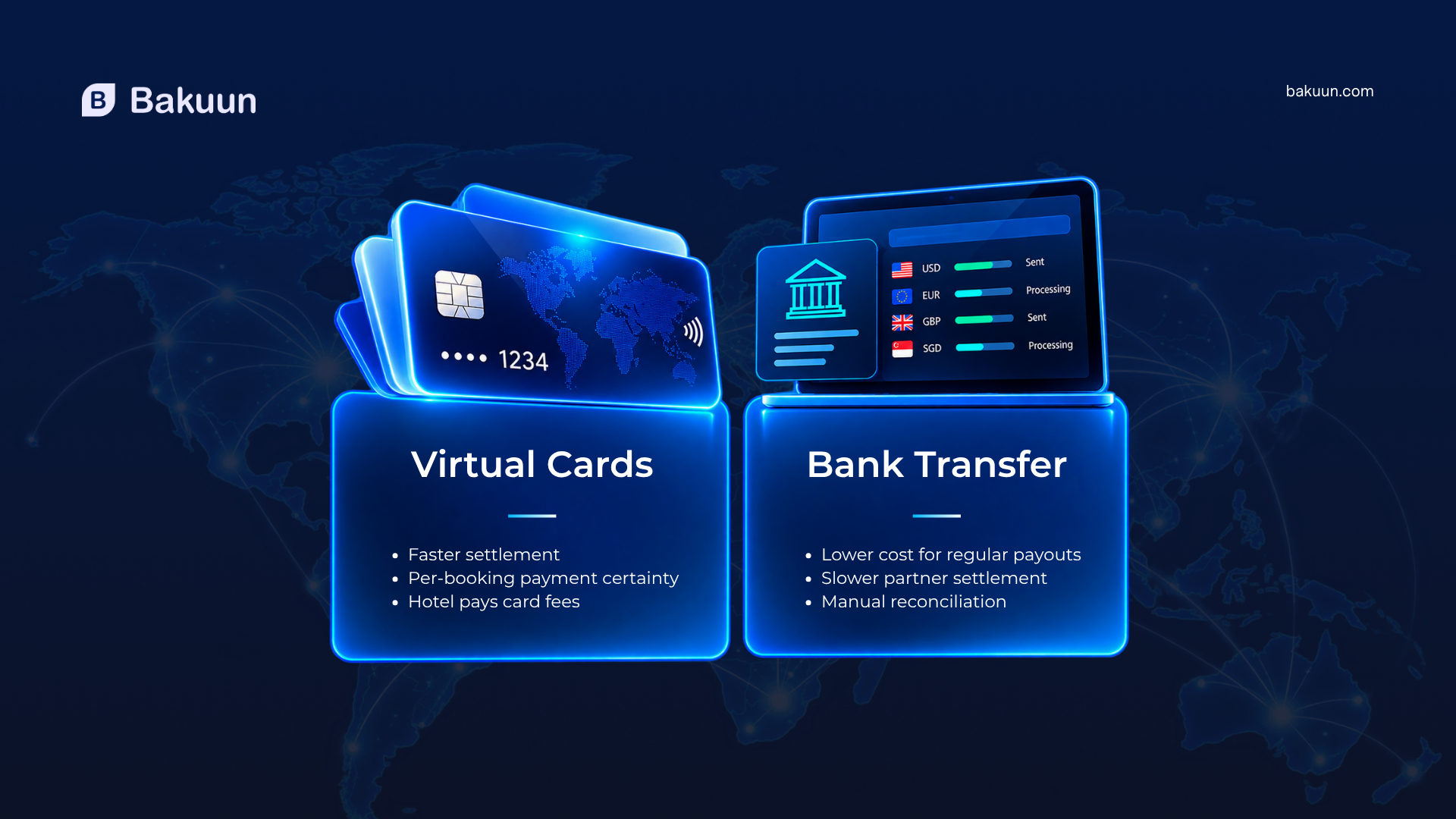


When a wholesaler, bed bank or OTA pays a hotel abroad, it uses either a single-use virtual card (VCC) or an international bank transfer. Here's how they compare.
Virtual card: the partner issues a single-use card for one booking, locked to an amount, currency and date window. The hotel charges it, usually at check-in or check-out.
Bank transfer: the partner sends money to the hotel's account, often over SWIFT via correspondent banks, and often batched weekly or monthly.
In short: with a VCC the hotel pulls the money; with a transfer it waits for the partner to push it.
VCC fees fall on the hotel; transfer fees fall on both sides.
VCCs are usually faster because the hotel controls the timing.
VCCs protect the hotel against non-payment. Transfers carry more fraud risk, and mistakes are hard to undo.
Most hotels end up working with both, varying by partner and market.
Either way: track every VCC's activation and expiry in one place, confirm bank-detail changes by phone, and ask partners for per-booking remittance details.
Whichever method you use, the costs stack up: interchange fees, FX spread and processing charges on every booking. Settlement then arrives weeks later without a booking reference, leaving finance to match it by hand.
Bookings that go through PayDocker settle at a lower cost and are tied to a booking reference at the moment of booking. Reconciliation runs itself.
Find out more with sales@bakuun.com or visit bakuun.com.